Menu
A Five engagement
Understand the culture you have. Design the culture you need.
Culture shapes every decision, behaviour and performance outcome in your organisation, and most leaders have no clear picture of the one that actually exists – especially across different levels, functions and sites. Culture Discovery is a structured diagnostic that makes the invisible visible, and then shows you how to change it.
Interviews, workshops and observational research, mapped to our Organisational Maturity Model.
Four domains, usually running at four different levels, converging as an organisation matures.
Why it matters
Most organisations jump straight to solutions. Leadership development, a new set of values, a change programme, a new platform – all of it before anyone has understood the cultural dynamics underneath. When culture is not clearly defined and understood, the investment misses the mark.
Culture Discovery helps you see the system as it truly is, so you can act with confidence and precision. We partner with your people to uncover what matters, what is getting in the way, and where you can intervene for the greatest impact.
Culture is not something you declare. It is something you design – through the systems you build, the behaviour you enable, and the expectations you reinforce.
Nick Mackeson-Smith, Founder and Chief Curiosity Officer, Five
The framework
A Discovery works across the five areas we always work across. The systems, structures and leadership around a culture are usually what shaped it, so reading culture on its own tells you what is happening and almost nothing about why.
Whether the direction is understood far enough down, and whether leaders behave like the culture they describe.
What actually gets rewarded, what gets tolerated, and where accountability goes quiet.
The lived experience of work: belonging, safety, trust, and the moments that matter most.
How people are hired, developed, promoted and supported, and what those systems teach everyone else.
The tools and platforms people work inside, and whether they enable the culture or fight it.
How it runs
A survey gives you a score. A Discovery gives you the system behind the score. It draws on behavioural science, human-centred design and our five pillar framework, and it runs in three moves.
Interviews, workshops and observational research across employees, managers and the experts who shape your systems. We arrive with curiosity and care, not clipboards and checklists.
Everything we hear is mapped onto the Living Employee Experience Map, so friction, intention gaps and unmet needs are located at specific moments rather than described in general.
Your own people set the priorities, against your position on the maturity model. Co-designed priorities get acted on in a way that recommended ones do not.
Employees do the work and experience the culture. Managers enable and translate it. And the subject matter experts shape the systems, tools, policies and platforms everyone else has to live inside. Each group sees a different organisation, and the gaps between those three views are usually where the useful findings are.
The maturity model
At the close of every Discovery we do not simply summarise what we heard. We map it across six levels of organisational maturity, so you can see both where you stand now and what it will take to deliver the culture and performance you need next. It is not a cultural health check. It is a strategic readiness map.
Culture is reactive and fragmented, and depends on individuals.
Awareness is emerging and isolated initiatives take shape.
New mindsets take root and leaders begin to sponsor change.
Systems and behaviours become consistent and embedded.
Culture is integrated into strategy, delivery and daily practice.
Continuous adaptation and improvement are simply the norm.
Maturity is not only a matter of mindset. In parallel we read the service design and user experience signals, because a culture that has genuinely moved shows it in how work is done, not only in how work is described.
Data, information, knowledge
User experienceVisible, findable, functional
Understanding, application
User experienceUseful, efficient
Insight, intuition
User experienceCollaborative, effective
The tools
Understanding a culture is about more than observing behaviour. It is about uncovering the values and beliefs that shape it. Every engagement is tailored, but a Discovery typically draws on five frameworks.
The framework breaks needs down into process steps. The resulting job map turns those needs into something you can build against. In jobs theory there are three types: functional, emotional and consumption.
How we use itWe explore what the new experience could look like, aligning process needs with system needs. We identify requirements for different users, understand the impact of the way tasks are done now, uncover the tasks people only think they need to do, and establish which systems they actually use.
It is the most actionable reporting format we have for mapping requirements to reality. It breaks into the areas that correspond to system needs and user needs along the employee journey, which means a discovery can be acted on in pieces rather than all at once.
How we use itWe use it to structure the discovery and to show where intention gaps sit, and where people meet friction in their everyday work. We look at what enables people, where they are held back, and where there is room to do things differently.
All of those cause misalignment on performance objectives, which shows up as slow or complex processes, errors in processing, and an absence of accountability for improving any of it. In your workshops we apply a behavioural lens to the causes and the symptoms.
How we use itWe seek to understand how your people talk to each other and about each other. What do they think of each other? What do they believe the other should be doing, and achieving? How much empathy do they express?
Belonging, improvement and progress, choice, equality and fairness, predictability, and significance. Each of us holds them in a different order, and which one sits at the top changes what we need from work.
How we use itWe ask which need matters most at each moment that matters on the LEEM. During co-design we ask the same question of the future: which need will matter most in the culture you are trying to build.
It surfaces gaps at the individual level, like planning to give a colleague feedback and never doing it, and at the organisational level, like committing to bring everyone together once a year and then not.
How we use itWe ask three questions at each moment that matters: what are you told to do, what actually happens, and how does that affect you and your colleagues? Then we gather those moments into themes.
Who you’d work with
Culture Discovery is led by the two of us, with the wider team brought in where a specific pillar needs them.
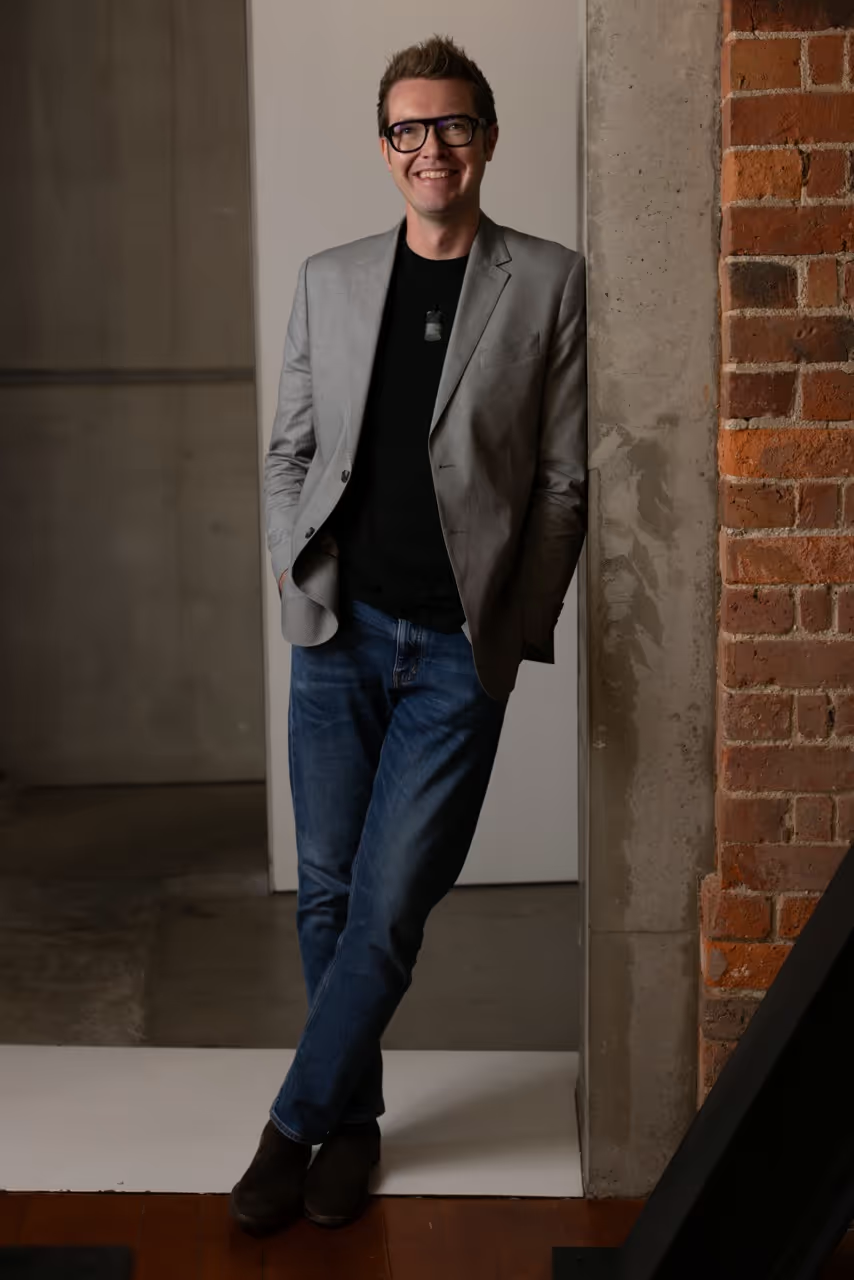
Client lead
Nick Mackeson-SmithStrategy
Performance
Culture
People
Technology
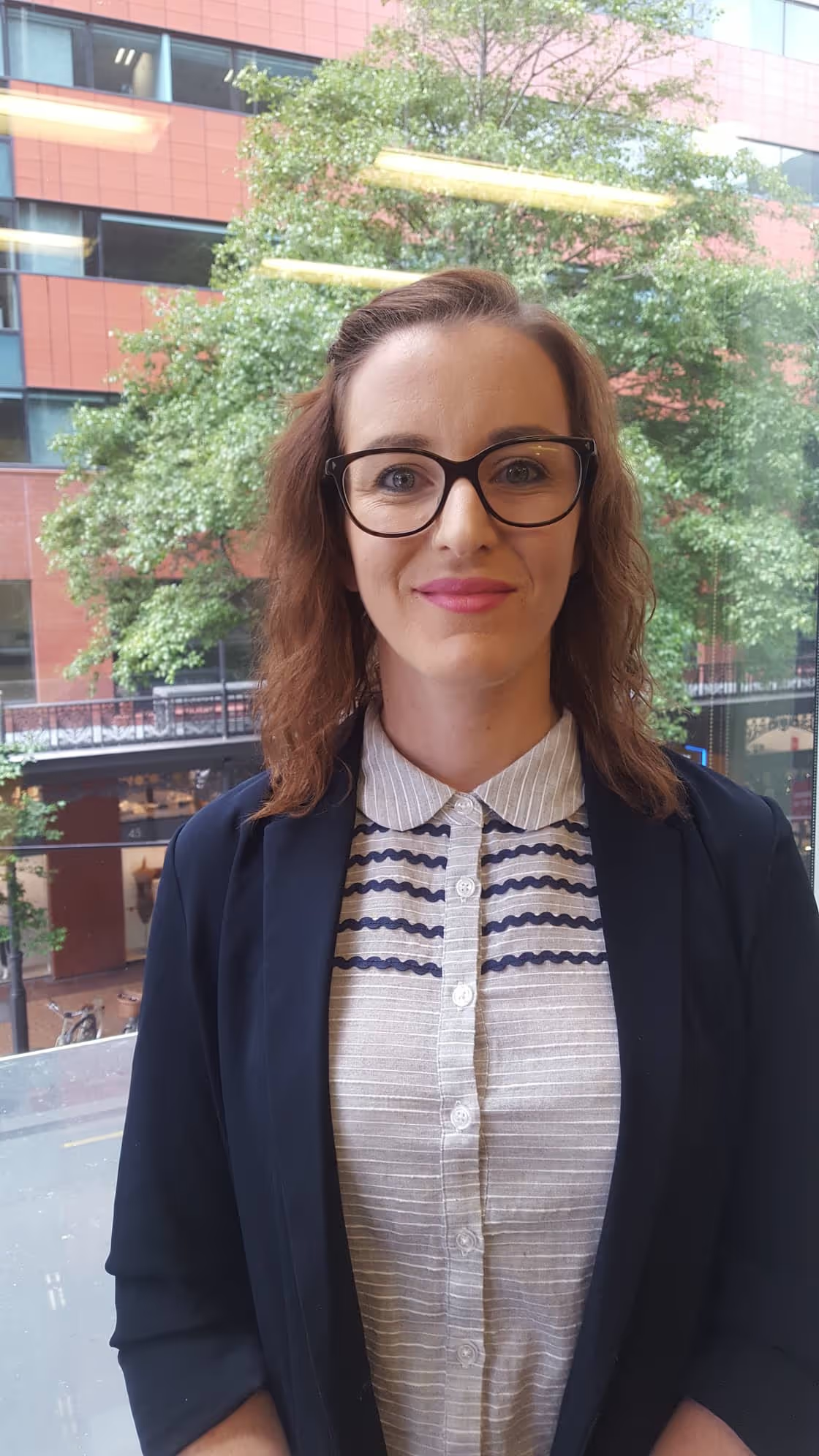 Racheal Reeves
Strategy
Performance
Culture
People
Technology
Related reading
We arrive with curiosity, rigour and care. Changing culture means asking hard questions and facing into complexity, but you won’t be doing it alone.
Or read how this played out at AA Insurance.
Make delivery inevitable.
© 2026 Five New Zealand Limited · NZBN 9429030159006 · Tāmaki Makaurau Auckland
Privacy notice